

Published Sunday, July 30, 2023
FOREWARD
We know a thing or two about Fire Rehab, taking care of America’s Firefighters on the Fire Ground, or at least in Seattle, Northshore, Shoreline, Bellevue, Mercer Island, and an occasional Everett, and Tacoma, Washington (USA) from our collective years of experience and service.
It was a great honor and privilege to be there during intense house fires, confined space rescues, a toppled-over crane incident (Bellevue), and HAZMAT calls to commercial structure fires.
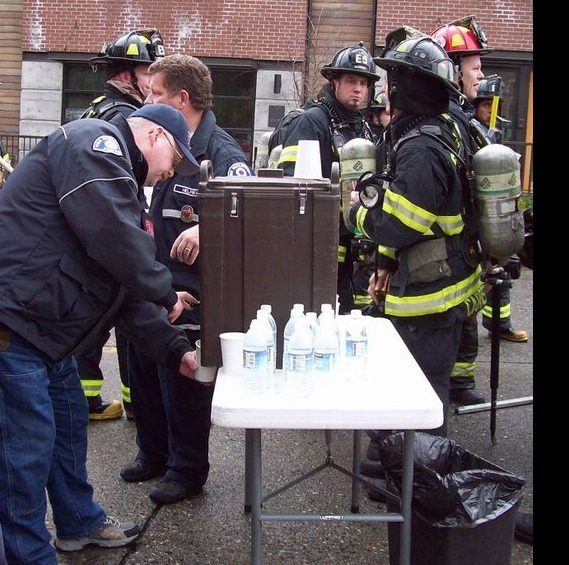
(L) Eric (in SFD black jacket) pours Gatorade and hands out bottled water to Seattle Firefighters | Photo Credit: NWFB
To be able to set up a Rehab area, where firefighters can just take a breather and relax for a moment after working during a stressful period of time, drink some water, and be checked out by Medics. Being to roam free within a fire scene and out of the way of working firefighters but closer than mainstream Media was a rush because you capture them in action doing what they are highly trained, skillfully, and experienced doing. All great memories are in our books. However, we knew we could always do better with the organization and at fire incident scenes.

Point-of-Interest | REHAB was where it all started for us to create this Fire Blog to showcase all of the great things firefighters and first responders are doing while covering fire news all over the northwest. Then shortly thereafter, it took off like wildfire and it includes national and global fire news coverage.
WHAT IS FIRE REHAB?
Fire REHAB or Firefighter Rehabilitation, as described by Wikipedia, is a vital firefighting service, that provides firefighters and other emergency personnel with immediate medical attention including rehydration, treatment for smoke inhalation, and the prevention of life-threatening conditions such as heatstroke and heart attack after working at the scene of an incident.
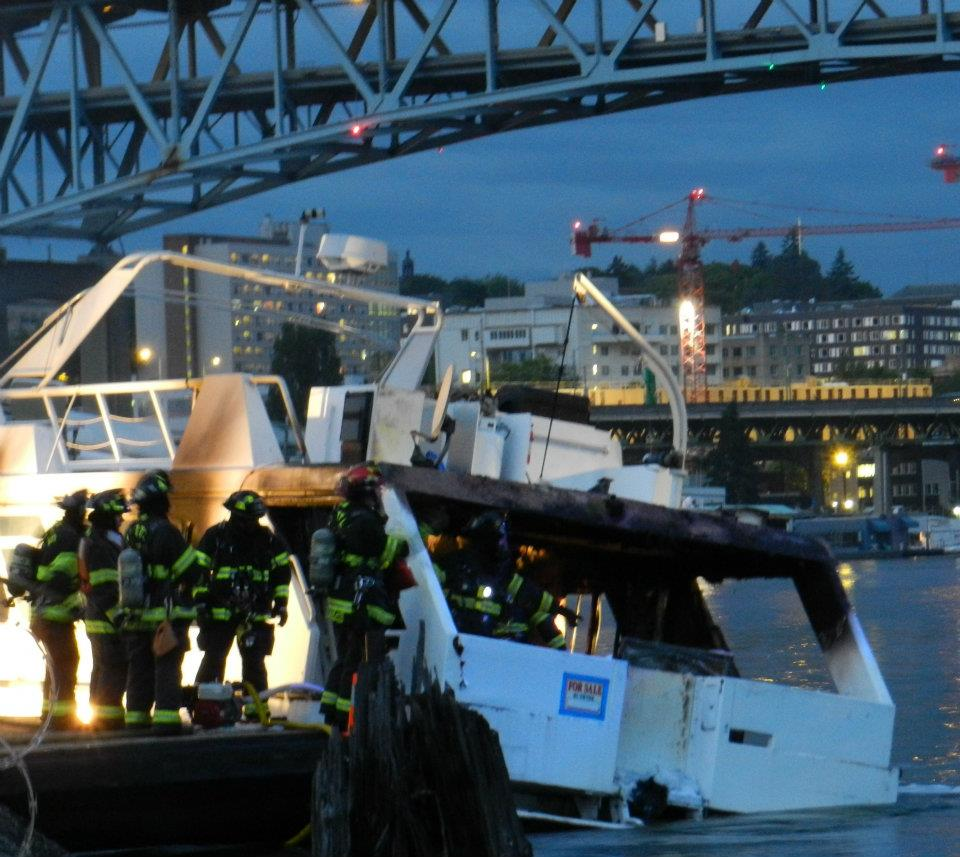
(L) Seattle Firefighters respond to a vessel fire located in Northlake (Seattle) on June 2, 2012. | Photo Credit: SFBS/Support 9
Our purpose was mainly to keep firefighters in the same, if not better condition than when they first arrived on the fire incident scene by providing them with a place to sit, out of the adverse weather conditions (sun, rain, snow, heat), giving them rehydration (water, Gatorade, coffee, etc.) and snacks (healthy and not-so-healthy treats), as well as having Medics monitoring them as precautions. Additionally, other first responders would be looped in with our treatment, care, and compassion, such as our Police Officers who would provide hard (traffic) closures, etc.
VOLUNTEERS OR AGENCY FIRE REHAB?
According to the NFPA 1584, STandard on the REHAB Process for Members During Emergency Operations and Training Exercises, enacted in January 2008.
An article from Fire Rescue 1 published on December 10, 2007, describes what the NFPA standard is, how to implement it, and the purpose of the Standard. The article may be 16 years old but it is the same principle of what is required and needed to keep firefighters on the fire ground safe mentally and physically. A newer version of the standard released in 2021, is on the NFPA website which can be downloaded for free if you register on their site.
NOTE: Not all IAFF and Volunteer Fire Departments are following the NFPA Standards even in 2023.
LAYOUT OF A FIRE REHAB AREA
The layout of a REHAB area is simple. Generally, for us, it would be designated by Fire Command and usually set up nearest to the Medic Unit or Command. The area generally would be “away” or downwind from the fire or HAZMAT area to keep rehabbers, firefighters, first responders, and anyone else that would be in the same vicinity safe and away from any type of potential exposure.
At REHAB scenes, gear included tables, chairs, mister fans (hot temps), shade (sunny conditions), bottled water and Gatorade, snacks, and other items specifically requested by firefighters at scenes, like their favorite frosted Frans animal cookies, a Seattle Fire favorite.
BEHIND THE SCENES
There is a lot that goes into a REHAB unit and the manhours alone to stay at the ready for any incident 24/7/365. Each personal REHAB unit, generally, a vehicle owned/operated by the non-profit carries separate supplies, such as iced-down water bottles and Gatorade, healthy snacks (and the not-so-healthy snacks), hot coffee (usually brewed before or picked up at the local Starbucks on the way to the incident) and for long incidents, the unit(s) may provide a meal for the firefighters (we did a few runs to the grocery store or had sandwiches dropped off). There would be stories shared about how they were about to sit down for dinner and the bells would tone them out on to the incident we were located at. Some of these times occurred more at other stations than others in their City, especially in Seattle.

Hanging out with the former City of Seattle Fire Chief Dean and SFBS Member, Eric at an annual BBQ event at a member’s house, was always fun. | Photo Credit: SFBS/Support 9
Additionally, there are tables, chairs, fan(s), a canopy, and more equipment to ensure REHAB is set up properly for the firefighters. There would be stories shared about how they were about to sit down for dinner and the bells would tone them out on to the incident we were located at. Some of these times occurred more at other stations than others in their City, especially in Seattle.
Multiple rigs could show up to any fire at any given time. Here, in this photo shows Support 9 and 1 at the scene of a house fire in Seattle. | Photo Credit: SFBS/Support 9
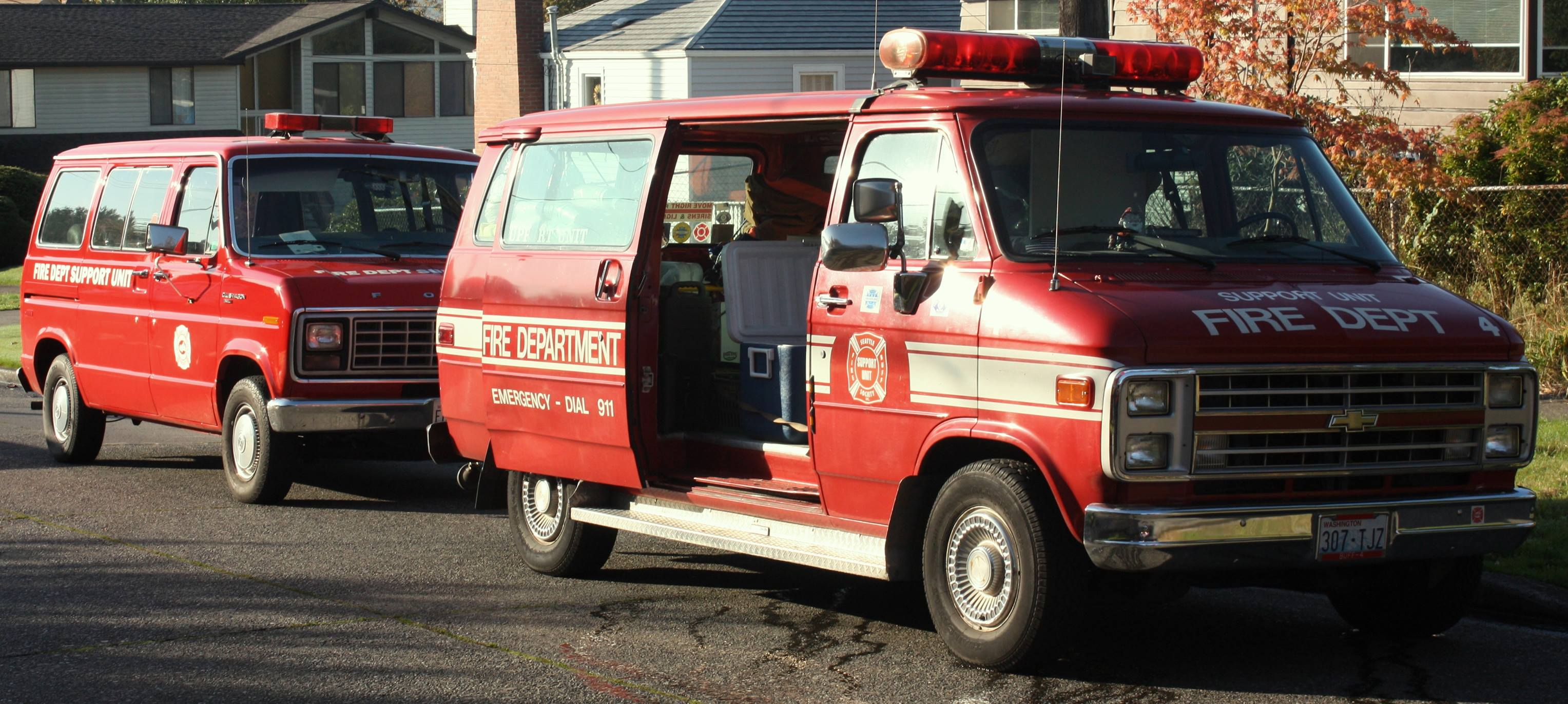
Grocery shopping is a necessity when it is time to restock the response vehicles, as well as going shopping in general, for extra supplies needed, like tables, chairs, new products on the market (always looking), and anything else that happens to get thrown into the unit that the driver feels is needed.
For some organizations, driver’s training is a must and a requirement before responding to an incident scene. Though most organizations, we have been associated with, this was not a requirement but recommend it be so, even if it is just a small van or another unit. As in our case, we responded along with the full fire response or if we knew it was a working fire, we’d respond after everyone had arrived on the scene. It is important for anyone who is a resource for the fire service to go through a driving course and what to expect when integrating with a fire agency before, during, and after an incident.
WHY FIREFIGHTER REHAB IS KEY TO FIREFIGHTER LONGEVITY
Firefighters are like athletes in that they must stay in tip-top shape, both physically and mentally when responding to a fire incident, especially when they are exerting a lot of energy. According to Lt. Ed Moore, who oversees a Yakima Fire REHAB unit states that a firefighter in full gear at a structure fire can lose almost three pounds of water weight in the first 15 minutes.
FEMA also adds several important key and well-supported stats that nearly one-half of all line-of-duty deaths among firefighters are the result of heart attacks and other cardiac issues. And, if that does not get your heart pumping, this will – about 80,000 firefighters are injured annually with almost 30% of them from overexertion and strain.
The National Fire Protection Association or NFPA, for short, established a standard requiring firefighters to rest for at least 20 minutes after either depleting two 30-minute air bottles or one 45-minute bottle.
GIVING BACK TO THE COMMUNITY
Volunteer Fire REHAB organizations do more than just provide REHAB to firefighters in various locations, they also give back to their communities. Some of the events along the way were the Annual Fire Festival in Pioneer Square (Seattle) back in the day, where we would set up a booth and put on display all of the great things the Seattle Fire Buff Society has accomplished, what they do and photos of past incidents.
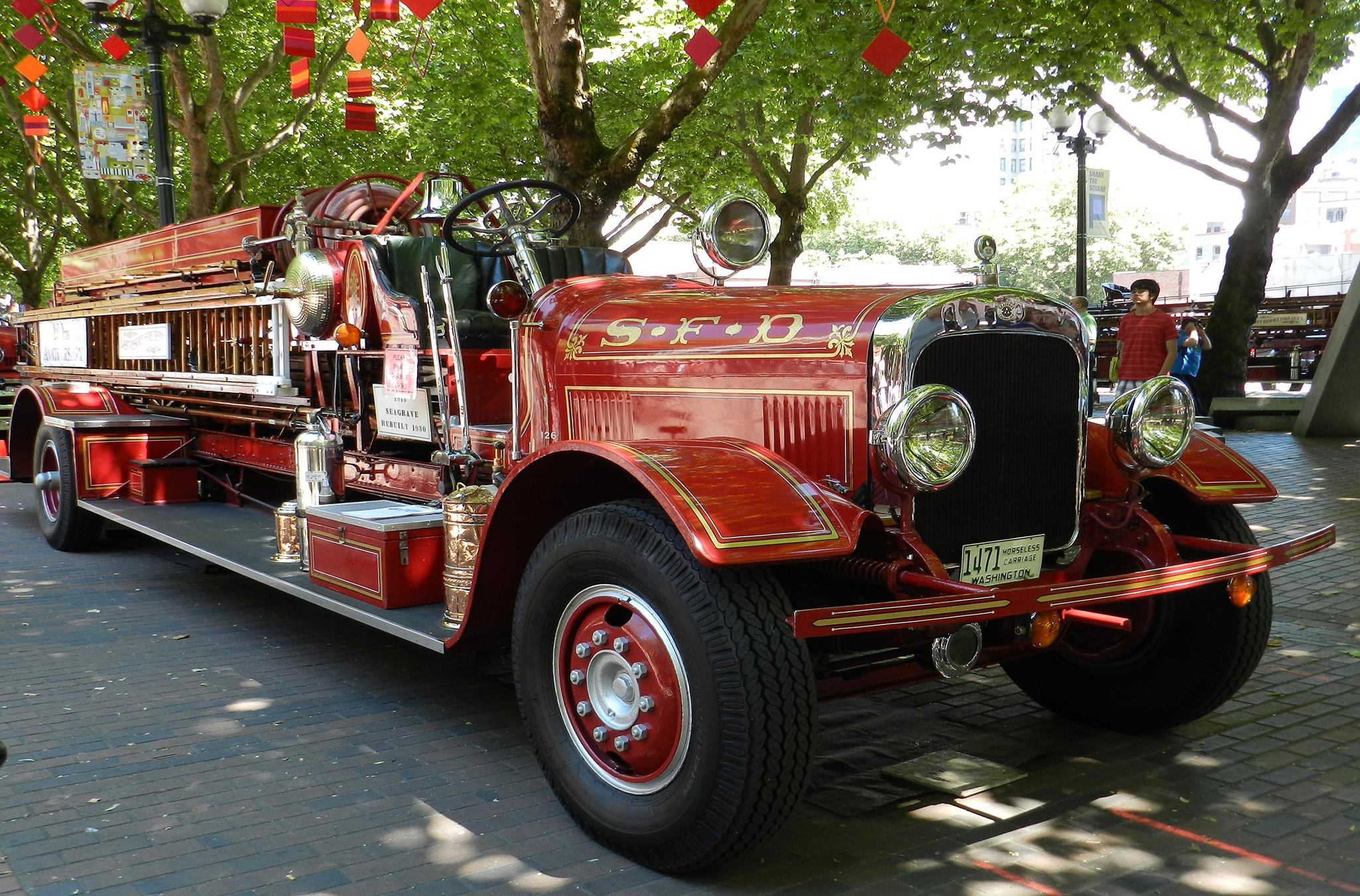
Additionally, there would be antique fire apparatus on display and access to a nearby Seattle Fire Museum hosted by The Last Resort Fire Department.
The photo was taken of one of Seattle Fire’s former fire apparatus now owned by The Last Resort Fire Department, a non-profit organization that restores former Seattle Fire apparatus and puts them on display.
- Website: https://lastresortfd.org/
- YouTube videos: https://www.youtube.com/watch?v=Pn6N4ppZPbY
FIRE REHAB IN THE NEWS
Yakima, WA: https://apnews.com/1ddc3b44f7f14f60a40038782260655c/Rehab-units-help-firefighters-with-overexertion,-dehydration (Source: AP News)
REHAB for Firefighters: https://www.iaff.org/emergency-incident-rehab/ (Source: IAFF)
Emergency Incident REHAB: https://www.usfa.fema.gov/downloads/pdf/publications/fa_314.pdf (Source: FEMA)
Rehab Units at Work: https://www.fireengineering.com/firefighting/rehab-units-at-work/ (Source: Fire Engineering.com)
Incident Support Unit Rig: https://www.firehouse.com/apparatus/type/hazmat-specialty/article/21000302/fire-department-incident-support-units (Source: Firehouse.com)
(c) 2023 NW Fire Blog
 NW Fire Blog